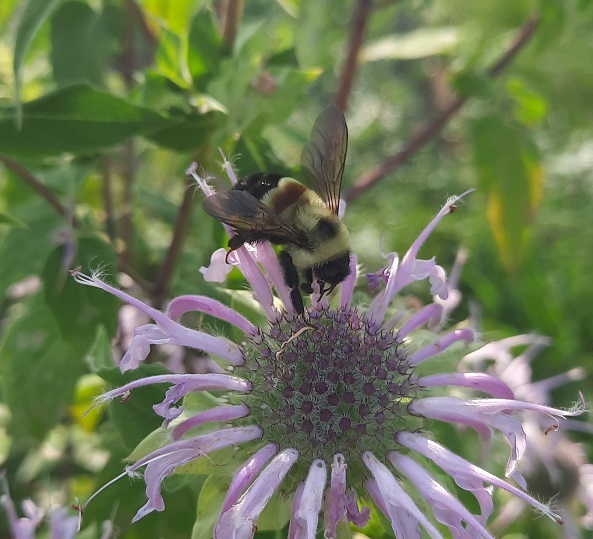
A Rusty-patched Bumble Bee coming in for a landing on a Bee Balm Flower
From the Iowa Department of Natural Resources
A new statewide project is looking for Iowa volunteers to help researchers track and monitor the state’s at-risk bumble bees. The Iowa Bumble Bee Atlas is a collaboration between the Xerces Society for Invertebrate Conservation, Iowa State University, and the Iowa Department of Natural Resources that aims to understand native bumble bee distributions and their habitat needs throughout the state.
Iowa is home to at least 14 species of bumble bees that play an essential role in sustaining the health of the environment, from pollinating native wildflowers to flowering crops in farm fields and backyard gardens. Unfortunately, several bumble bee species native to Iowa have undergone alarming declines and face an uncertain future.
“The recent listing of the rusty patched bumble bee as an endangered species by the U.S. Fish and Wildlife Service is increasing the need to collect data on the occurrence of all bumble bee species in our state,” said Dr. Matthew O’Neal, professor of entomology at Iowa State University.
Bumble bees and community scientists
The effort is one of a growing number of Bumble Bee Atlas projects run by the Xerces Society and their partners in 20 states. In 2023 alone, more than 900 individuals participated in the Atlas, documenting over 20,000 bumble bees. The volunteers have discovered species previously thought to be gone from their states, contributed to new field guides, and rapidly improved scientists’ understanding of bumble bee populations across the United States. Without the efforts of these “community scientists,” it would be impossible to gather information across such a wide geographic area.
“Community science is a powerful conservation tool,” said Genevieve Pugesek, an endangered species conservation biologist with the Xerces Society. “Declining species are typically not abundant on the landscape, which makes them really difficult to study. It requires a lot of time and dedication to collect sufficient data on these species. A great deal of what we know about rare and threatened bumble bees is thanks to volunteer contributions.”
Information gathered by community scientists provides a modern day snapshot of bumble bees and serves as a benchmark to which future conditions can be compared. Data can be used to assess bumble bee ranges, phenology, and habitat associations and evaluate how these patterns have changed over time. This information can then be leveraged to design conservation guidelines for at-risk species and create habitat management guidance for land stewards.
“Knowledge about vulnerable insects and other wildlife is so important to setting our management objectives, so that we can contribute to the continued health of these species,” said Stephanie Shepherd, a wildlife diversity biologist with Iowa Department of Natural Resources. “We are excited to learn more about the bumble bees in our wild areas and everywhere else.”
Traditionally, community science projects receive much of their data from densely populated towns and cities, while rural and remote areas remain under-surveyed. In Iowa, monitoring wildlife in these rural areas can be particularly challenging because 98% of the state is privately owned. The Atlas project prioritizes rural areas, allowing scientists to better understand how bumble bees are faring outside of urban settings. Collecting data across the state will call for volunteers ready to explore all areas.
The Iowa Bumble Bee Atlas is open to anyone with interest in pollinator conservation. Training will be provided on how to complete surveys, take high quality photographs of bumble bees, and submit observations using a platform called Bumble Bee Watch. Interested volunteers can sign up for the first online training event on April 13 and view other events at bumblebeeatlas.org.
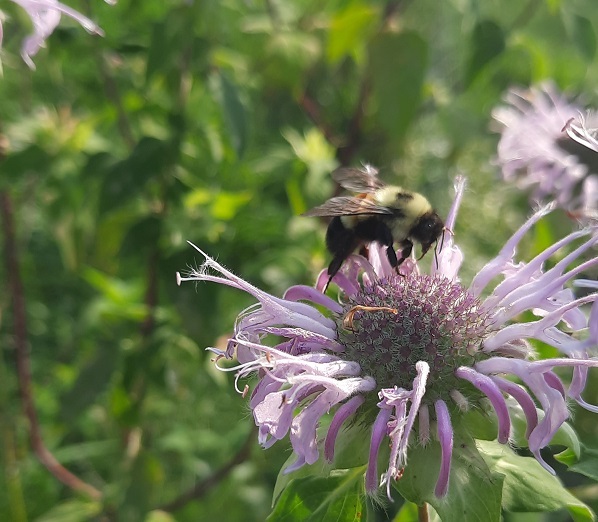
A Rusty-patched Bumble Bee “robbing” nectar from a Bee Balm flower.
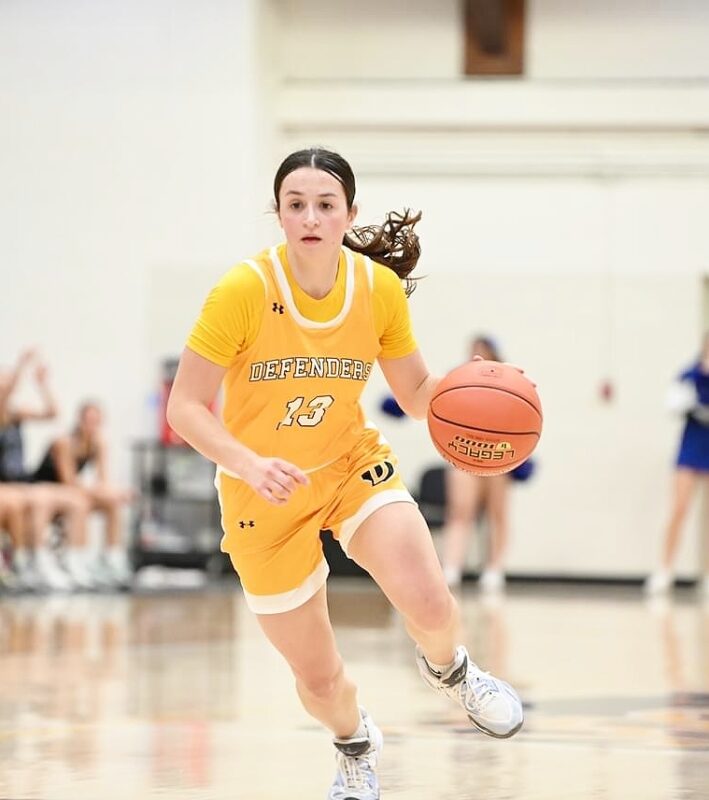
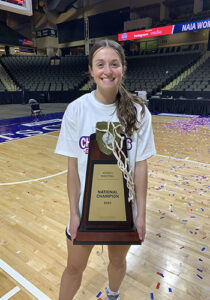 Beckman made the most of her time while at Dordt, racking up accolades such as four Great Plains All-Conference selections, NAIA All-American, three CSC Academic All-Districts, NAIA Daktronics Scholar Athlete, Emil S. Liston award nominee and, of course, NAIA National Champion.