ACGC school boards see ‘excellent’ attendance and enrollment increases

By Rich Wicks | Times Vedette

The Adair-Casey and Guthrie Center school boards held a joint meeting at Adair-Casey Junior High on Oct. 16.

Brian Sauser, principal for grades 9-12, provided an update on how things are going at the high school. In particular, he said attendance is “excellent” with the new guidelines in place.

“Attendance-wise, it’s completely systematic now. We don’t have a day where we have an unexcused absence, hardly ever,” Sauser said. “In the event that we have a tardy, then we’re meeting with those kids on the spot.”

Superintendent Josh Rasmussen updated the boards on the certified enrollment.

“When we certified this past week, Guthrie Center’s up 2.66 and Adair-Casey is up 13,” Rasmussen said. “The open enrollment, overall, is in a much better place…compared to where we were a year ago.”

Adair-Casey accepted resignations of Jocelyn Jesko (elementary paraeducator) and Cindy Lundy (junior high volleyball coach 2025-26). The board approved contract recommendations for Baylie Leonard-Lowe (head cook), Kasey Harrington (junior high paraeducator) and three junior high coaching positions (Jason Calhoun as junior high volunteer assistant girls basketball coach, Amber Gettler as junior high volunteer assistant girls basketball coach, and Jeremy Gettler as junior high boys basketball coach with additional stipend).

Guthrie Center accepted the resignation of Linda Webber (part-time night custodian). The board approved coaching positions for Wesley Policky (high school assistant boys basketball coach, Lori McGivney (high school boys golf coach), and William Shull (high school girls golf coach).

The Adair-Casey board approved a bid to add a few more cameras in the elementary and junior high schools for enhanced security.

Board members Justin Crawford (AC) and Brian Sheeder (GC) agreed to be the representatives to attend the Iowa Association of School Boards (IASB) Delegate Assembly on Nov. 20.

Because of the IASB Annual Convention, the next meetings of the boards were tentatively set as follows: Adair-Casey School Board will meet on Monday, Nov. 18 at 7 p.m. at Adair-Casey Junior High. Guthrie Center School Board will meet Wednesday, Nov. 20 at 7 p.m. at the high school. The public is welcome.

Feeding a multitude

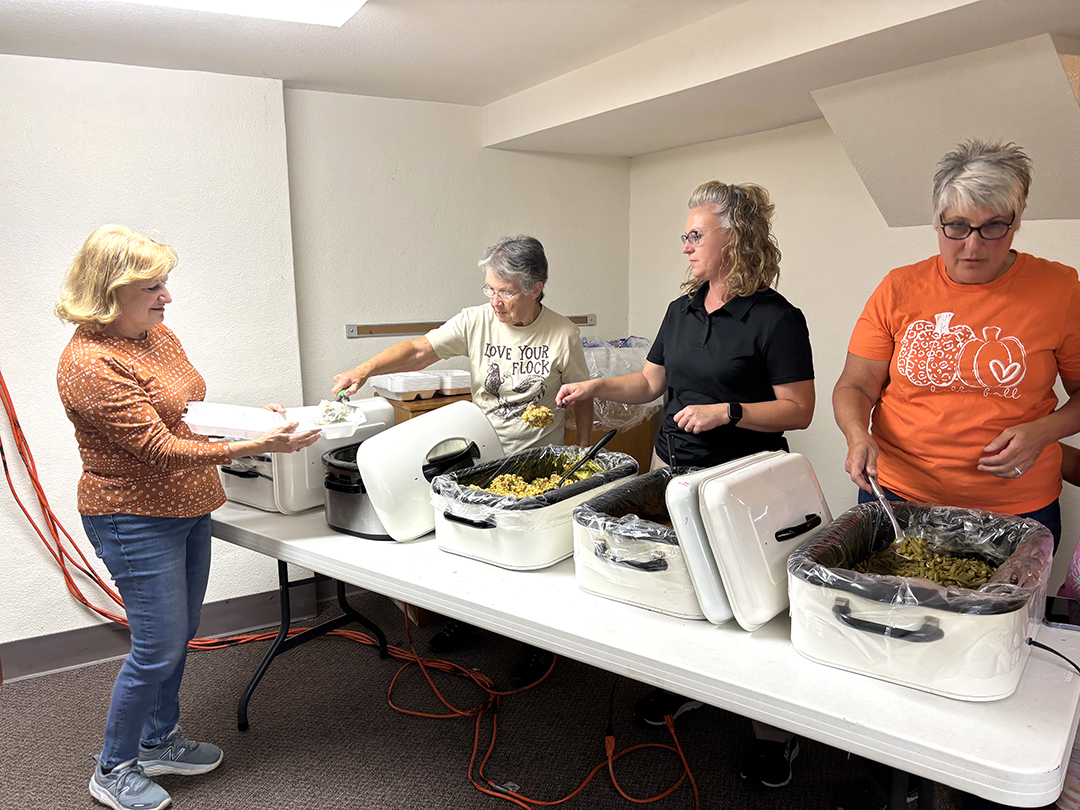
Donna Bentell, Sandy Mortensen, Hilaree Stringham and Teri Petersen dish up carryout meals.

By Rich Wicks | Times Vedette

Guthrie Center First United Methodist Church held a free-will donation harvest supper on Oct. 16. The meal included roast pork, dressing, mashed potatoes, green beans, homemade salads and a variety of homemade pies. Meals were available for dine-in or carry-out. Attendance was strong, but the large crew of helpers was ready for the task.

Iowa deer hunting off to a good start

From the Iowa Department of Natural Resources

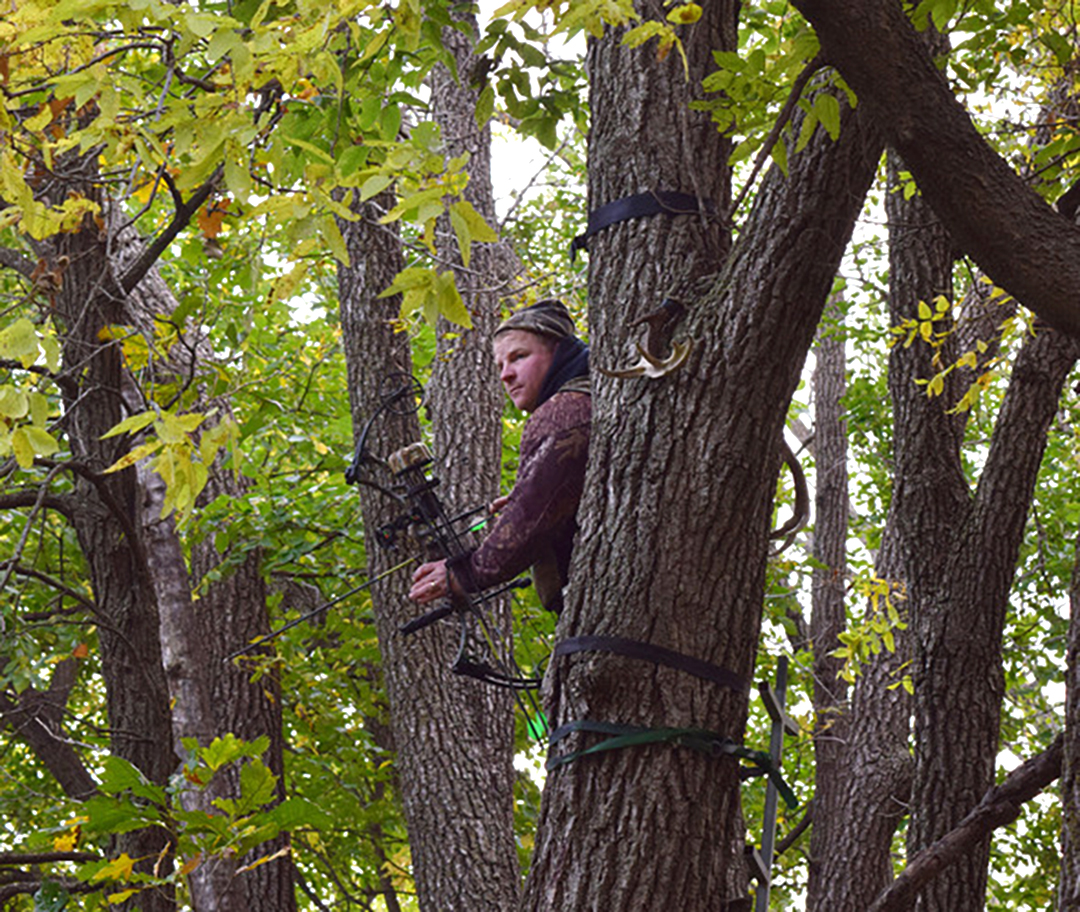
Despite warm weather persisting in much of the state, roughly 6,000 deer have been registered so far through the youth and disabled hunter seasons, and the opening of the archery and early muzzleloader seasons, which is slightly higher than both last year and the five-year average.

The crop harvest, cooling temperatures and approaching rut, should increase deer activity leading to greater harvest success.

The long-anticipated rut, which will be in full swing by November, is when mature bucks spend much of their time actively tending and searching for does during daylight hours, creating opportunity for thrilling action from the tree stand at any hour of the day.

A major factor leading to Iowa’s world-renowned buck quality is the simple fact that hunting during the rut — when bucks are most vulnerable — is restricted to compound and traditional bows. The archery season runs through Dec. 6, then closes for the two regular gun seasons before re-opening Dec. 23 through Jan. 10, 2025. The early muzzleloader season closes Oct. 20.

Deer disease update

Iowa’s deer population is in the midst of another outbreak of hemorrhagic disease, which tends to affect Iowa deer from late summer to early fall. Though outbreak severity varies annually, it began increasing in September, with roughly 750 related deer mortalities reported throughout the state, which is considered a moderate outbreak compared to past years.

The DNR added new online tools to the Deer Hunting webpage that allow the public to report and monitor hemorrhagic disease activity. Hemorrhagic disease has been reported in at least 78 Iowa counties, though disease activity has generally been mild at the county scale at fewer than 50 mortalities per county.

Chronic Wasting Disease (CWD) continues to increase in geographic spread and prevalence, though most Iowa counties have yet to detect their first CWD-positive deer. Last year, eight new counties were added to the list: Des Moines, Guthrie, Howard, Jones, Marshall, Monroe, Muscatine, and Tama, bringing the total number of counties that have had a positive deer to 23.

Testing of hunter-harvested deer is available in each county by contacting the local DNR wildlife or law enforcement staff. Hunters can help limit the spread of chronic wasting disease by refraining from feeding/baiting deer and transporting deer carcasses across counties. The Iowa DNR primarily manages the disease in areas with moderate-to-high deer densities by adding antlerless tags within special Deer Management Zones.

Iowa’s pheasant season opens Oct. 26

From the Iowa Department of Natural Resources

Success during the 2023 pheasant season has Iowa hunters eagerly awaiting this year’s opening day and with bird population estimates similar to two years ago, hunters are expecting another great fall afield.

Pheasant hunting has been an Iowa tradition spanning generations. This year, it starts with the resident youth-only pheasant season Oct. 19-20 that is only open to Iowa youths aged 15 and younger. Iowa’s regular pheasant season is Oct. 26 through Jan. 10, 2025.

Friends and family would gather late each fall to reminisce about hunts from years gone by, while planning the next outing. For decades, Iowa was a pheasant hunting destination and the 2024 season marks the end of the first century of pheasant hunting in the Hawkeye State.

The Iowa DNR and Pheasants Forever are partnering to celebrate Iowa’s 100-year tradition of pheasant hunting beginning this fall, and running through October 2025.

History, news stories, population surveys, places to hunt, classes and events, links to other resources and more is all available on a new webpage at https://info.gooutdoorsiowa.com/100-year-pheasant-anniversary/ marking the 100-year anniversary. The page will be updated throughout the year.

2024 pheasant season expected to be similar to 2022

The Iowa Department of Natural Resources’ annual August roadside survey found the statewide pheasant population to be 19 birds per 30-mile route, down from 23 birds per route last year. The decline was likely due to a wetter than normal spring that coincided with the nesting season. Based on the results, hunters can expect a harvest between 350,000 and 400,000 roosters.

This year’s excitement comes on the heels of a successful 2023 season that had a jump in harvest to 590,000 roosters, the most since 2007, thanks to roughly 20,000 additional pheasant hunters returning to the field.

“We’ve had a population that could support this level of harvest, but until last year we didn’t have the hunter numbers,” Todd Bogenschutz, upland wildlife biologist for the Iowa Department of Natural Resources, said.

An estimated 83,600 pheasant hunters participated in 2023, and many of those came from out of state. Iowa has been attracting pheasant hunters from Minnesota, Michigan, Wisconsin, Illinois, Missouri, Ohio, Nebraska and from as far away as Georgia, North Carolina and Alabama.

These hunters can expect to find higher populations in west central and northwest regions, followed by central and north central Iowa, Bogenschutz said.

“Look for cover, cover will hold birds, regardless of location,” he said.

The return of drought conditions across much of the state since August has allowed the corn and soybean harvest to occur without pause. As of Oct. 6, the corn harvest is about 22 percent complete which is about average and the soybean harvest is 58 percent complete, which is ahead of schedule.

As the harvest progresses and the birds become more visible, Bogenschutz begins to get more phone calls from hunters looking for insights.

“What I’ve been telling them is, that we could see most of the crops out of the fields by opening day, and if that’s the case, we could see another really good opening weekend, similar to last year. If hunters want less competition, they should consider going during the week, but the first few weekends it will be pretty busy out there,” he said.

Roughly one-third of the pheasant harvest occurs within the first nine days of the season. Iowa’s pheasant hunters season opens statewide on Oct. 26.

Places to go hunting

Iowa hunters have been using the interactive Iowa hunting atlas to find new places to go hunting. The hunting atlas features more than 680,000 acres of public hunting land that is owned by the state, county or federal governments. It’s available online at www.iowadnr.gov/hunting.

This tool allows hunters to see which zone the public area is in, type of shot allowed, wildlife likely to be found and get an overhead look at the terrain. The mobile version of the atlas will show hunter location on the area if granted permission.

The atlas view from above allows hunters to zoom in on an area, see how to get there, the lay of the land and where one parcel of public hunting land is in relation to others and print off maps.

Information is updated as public hunting lands are acquired.

The hunting atlas also includes 33,000 acres of private land enrolled in the Iowa Habitat and Access Program (IHAP) where private landowners receive assistance to improve habitat on their land in exchange for opening the property for hunter access.

Site maps are available at www.iowadnr.gov/ihap showing boundaries and which species would be most likely attracted to the habitat. Walk-in public hunting through IHAP is available between Sept. 1 and May 31.

Springbrook State Park to host information session about friends group opportunities

Contract: IA Park: 610116

Special to the Times Vedette

Local residents who have a passion for Springbrook State Park and may be interested in helping to establish a friends group are invited to attend an informational session on Nov. 6 from 6-8 p.m. at the park office.

Friends groups are nonprofit entities that support individual state parks in a variety of ways, including leading local outreach and fundraising efforts, coordinating improvement projects for natural areas and buildings, hosting special events and more. Springbrook is seeking longer-term volunteer leaders who want to be a part of something bigger and create a lasting legacy. They especially encourage people with any past volunteer organization/operational experience.

The information session will be a discussion about how friends groups are established, how they operate, and their roles working with a state park. Currently, approximately 30 Iowa state parks and forests have active friends groups making a difference and supporting their local natural areas.

For more information and to RSVP your attendance, contact Reaghan Oakleaf at the park office at 641-747-3591 or email reaghan.oakleaf@dnr.iowa.gov.

Fall color will be at or near its peak across Iowa this weekend 

From the Iowa Department of Natural Resources

The fall color season is near its peak in northeast Iowa. Leaf color is becoming more vibrant with our recent cooler nights. Aspens are turning bright yellow along with the bright reds and oranges on sugar maple.

Fall color is at peak in north central and northwest Iowa. Many species are in full yellow, including green ash, ironwood, hackberry, hickory, cottonwood, elms, and walnut.  Maples are looking vibrant with orange and red colors.  Poison ivy and Virginia creeper are showing red along with sumac and dogwoods.

Central Iowa will be at peak fall color from now through about the next ten days. Lots of yellows at full peak, including cottonwood, elm, walnut, hackberry, ash, hickory, and others. Red and crimson colors are good on sumac, dogwood, Virginia creeper, and some maples.  Oaks have started to partially turn red.

Quite a bit of yellow, brown, and green across the forested landscape in southeast Iowa. Maples in urban settings are showing various red, orange, and brown colors. Roadside and field edge shrubs are red, purple, brown, and green. Virginia creeper and poison ivy are red.  Peak season is not in full effect, but getting closer.

West central Iowa is likely as good as it will get this week. Drought conditions and high winds have led to early color changes on some species. Yellow colors will be plentiful this week with some reds from sumac and vines adding to the color. The last of the fall prairie flowers are finishing their bloom. Prairie grasses will likely be brown by the end of the week.

White ash, sugar and red maples, and some black cherries are the only trees showing colors beyond yellow in urban and rural areas of southwest Iowa.  Most upland trees are still very green (oaks) even into the central Loess Hills.  Native shrubs (sumac, dogwood, wahoo) will be at peak color this week. Cottonwood, hickories, honey locust are yellow.